
Letters as a Form of Presence
The HummingbirdThis subplot follows the letters between Marco and Luisa as physical objects that sustain intimacy, preserve memory, and reveal how writing both connects and postpones them.
increasing Bearing strength in each event
 decreasing
Bearing strength in each eventdecreasingA Postcard from Rome

A Postcard from Rome
A compressed message
Marco writes that he works and thinks of Luisa. The postcard contains almost no explanation, yet it makes his continued attention explicit.
Distance held in a few words
The brief message belongs to a relationship maintained through intermittent communication and long absences. Its smallness reflects the difficulty of saying plainly what each has meant to the other.
A few words become a portable sign of presence across distance.
A Dream Sent from Paris

A Dream Sent from Paris
Luisa writes again
Luisa describes a dream in which she and Marco laugh together in a hammock. She breaks a promise not to write, explaining that the dream made her want to contact him.
The letter keeps intimacy alive
The message moves between mundane observations and the feeling that Marco is what remains when everything superfluous disappears. It gives their relationship warmth without changing their circumstances.
Writing lets Luisa approach a closeness that waking life has left unresolved.
Poems Preserved Inside a Book
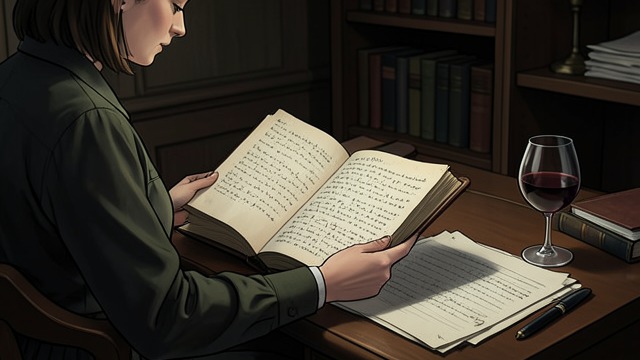
Poems Preserved Inside a Book
An old object returns
Luisa finds three poems hidden in a book she is preparing to put away. She remembers copying them during an earlier period of separation because they seemed to describe her relationship with Marco.
The poems name absence
Their lines imagine a whole life not shared, a desired presence, and the effort to make a beloved person seem not to exist. Luisa writes to Marco because the discovery renews the feelings she had tried to contain.
The book acts as a memory device that brings a past attachment back into the present.
A Letter About the Hummingbird
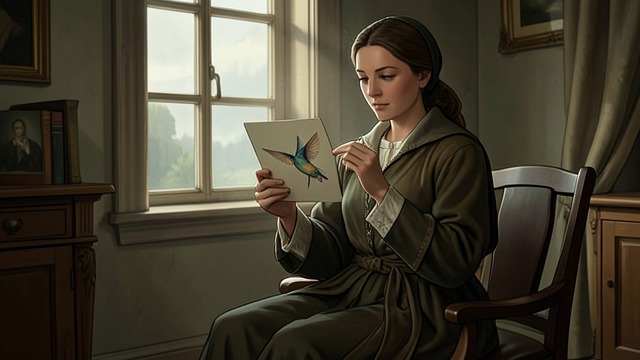
A Letter About the Hummingbird
A symbol encountered by chance
Luisa reads an article about Aztec beliefs in which the dead might become hummingbirds. The passage reminds her of Marco’s childhood nickname and prompts her to write after years of silence.
An apology without a plan
She tells Marco she misses him, then apologizes for making a mess. The letter reopens contact but does not itself settle what either wants from the relationship.
Its ambiguity becomes a reason for Marco to answer rather than speculate in silence.
The Last Letter Answered

The Last Letter Answered
Marco responds to Luisa’s insight
After Luisa describes him as a hummingbird who expends immense energy staying still, Marco finally answers. He agrees that stillness has shaped their missed chances but insists that his own life has been forced through painful changes.
A boundary at last
He tells her that Miraijin is now the center of his life and that he cannot begin another relationship with her. The response ends a correspondence that had repeatedly revived their attachment.
The letter gives Marco a final form of presence: an answer that is also a refusal.
April 17, 1998
March 15, 1983
October 1998, after Luisa finishes her doctorate
January 21, 2005
December 27, 2018
